

Introduction — The Knife That “Feels Safe”
There’s a quiet belief living in most kitchens.
Not loud. Not dramatic. Just… accepted.
A sharp knife is dangerous. A dull one is safer.
It sounds reasonable — like something you never needed to question.
But here’s the thing no one really tells you:
A dull knife doesn’t feel dangerous.
It feels… manageable.
And that’s exactly why it’s the problem.
When a Knife Stops Cutting, You Start Compensating

A sharp knife moves.
A dull knife resists.
And without noticing it, you adjust:
you press a little harder…
then a little more…
then just enough to get through it.
Cooking stops feeling like flow.
It starts feeling like effort.
And somewhere in that shift, control begins to fade.
Not all danger looks sharp. Some of it feels heavy.
The Moment a Knife Hesitates — That’s Where Risk Begins

A good blade commits instantly.
A dull one pauses…
then drifts.
Tomatoes don’t get sliced — they get pushed.
Peppers don’t open — they resist.
Onions fight back just enough to throw you off rhythm.
And in that tiny moment — hesitation —
the knife stops listening to your hand.
That’s where accidents live.
Not in sharpness.
In unpredictability.
Your Knife Quietly Rewrites the Way You Cook

No one decides to cook badly.
It just… happens slowly.
A dull knife teaches you things you didn’t mean to learn:
- to saw instead of slice
- to grip tighter than necessary
- to rush certain cuts and avoid others
- to accept uneven results as normal
And over time, this becomes your baseline.
Not because it’s correct —
but because it’s consistent.
A Sharp Knife Feels Different — And That Changes Everything
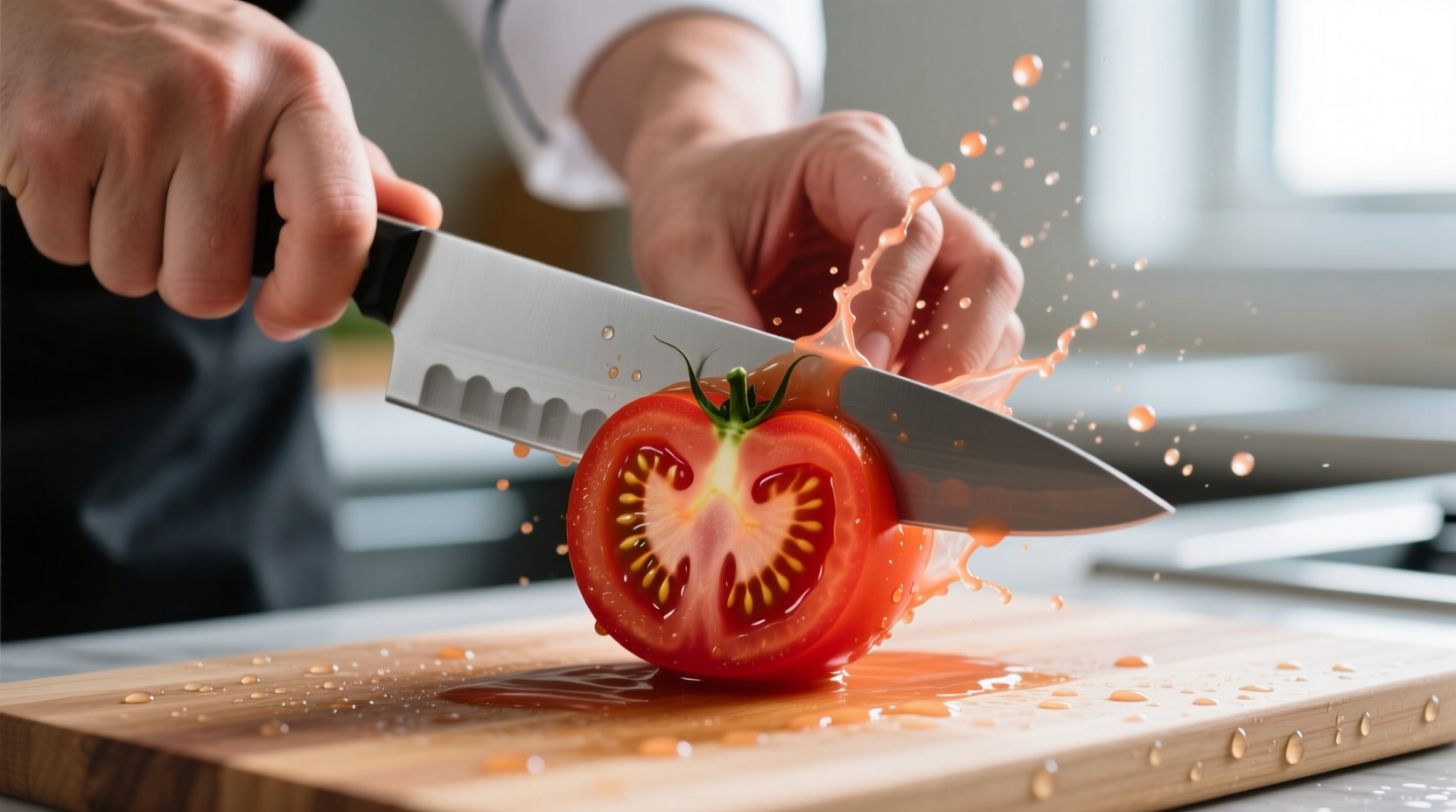
The first thing people notice with a sharp knife isn’t speed.
It’s ease.
The blade doesn’t argue.
It doesn’t resist.
It doesn’t surprise you.
It simply does what you expect.
And that quiet predictability?
That’s what makes it safer.
That’s what makes prep faster.
Cleaner.
Almost… enjoyable.
The Signs Are Subtle — Until They’re Not

Most knives don’t fail dramatically.
They fade.
You’ll notice it in small ways:
- tomatoes collapsing before slicing
- herbs bruising instead of cutting clean
- meat tearing instead of separating
- your hand working harder than it used to
Nothing feels urgent.
Just… slightly off.
Until one day, cooking feels heavier than it should.
Conclusion — The Problem That Doesn’t Look Like One

A dull knife doesn’t interrupt your cooking.
It blends into it.
It doesn’t break.
It doesn’t fail.
It just slowly changes how everything feels.
More effort.
Less control.
Lower quality.
And because it happens gradually, most people never question it.
If this felt familiar, you’re not imagining it.
Most home cooks don’t need better recipes or more practice —
they need a tool that actually works the way it should.
And once that changes, something unexpected happens:
Cooking gets lighter. Faster. Cleaner.
In the next step, we’ll get practical —
The Beginner’s Guide to Knife Sharpening: What You Actually Need (And What You Don’t)


